Shedrach Uzenab: Making art from the edges of life
Art has the power to question the stories we tell about the world, where forgotten objects, resilience, and cultural history intersect. Each piece is a journey of transformation, giving new meaning and voice to overlooked moments and materials.
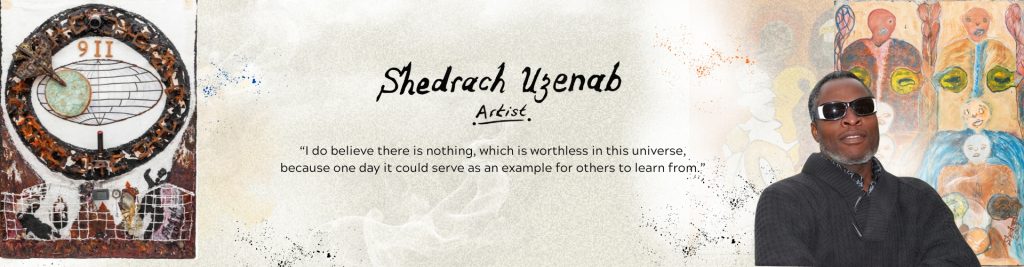
Shedrach Uzenab: Making art from from the edges of life
Art has the power to question the stories we tell about the world, where forgotten objects, resilience, and cultural history intersectEach piece is a journey of transformation, giving new meaning and voice to overlooked moments and materials.
Swiss-Nigerian contemporary artist
Shedrach Uzenab
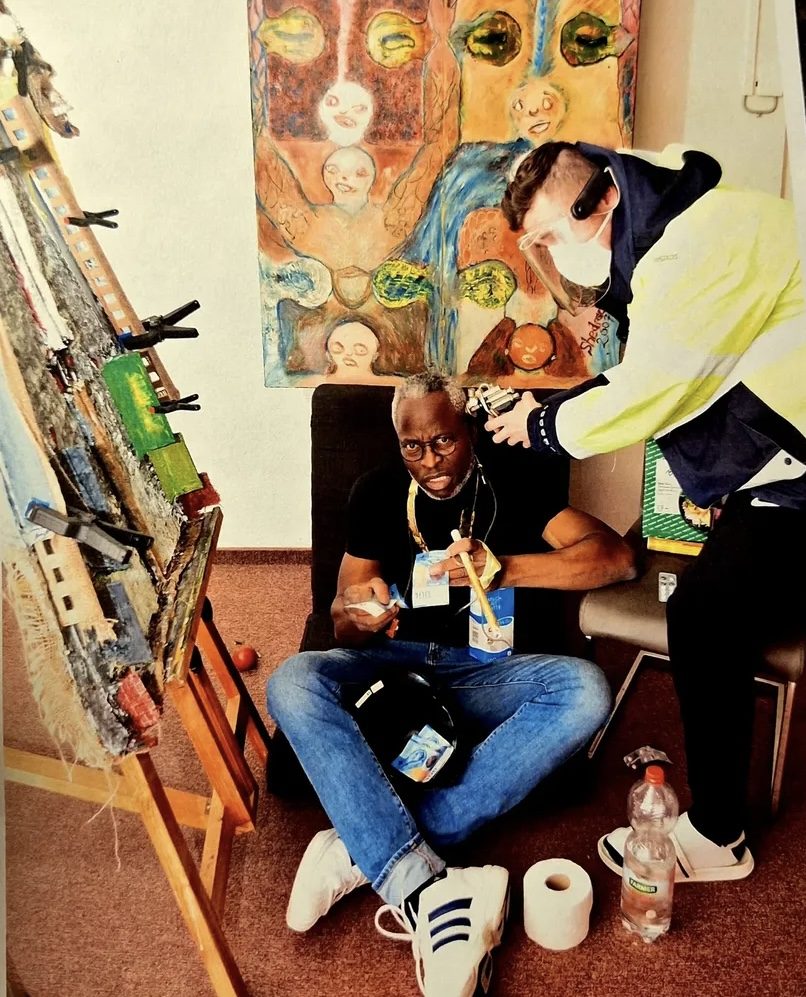
Swiss-Nigerian contemporary artist
Shedrach Uzenab
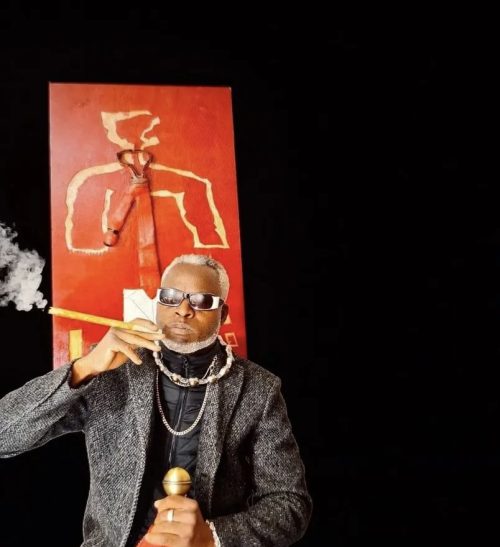
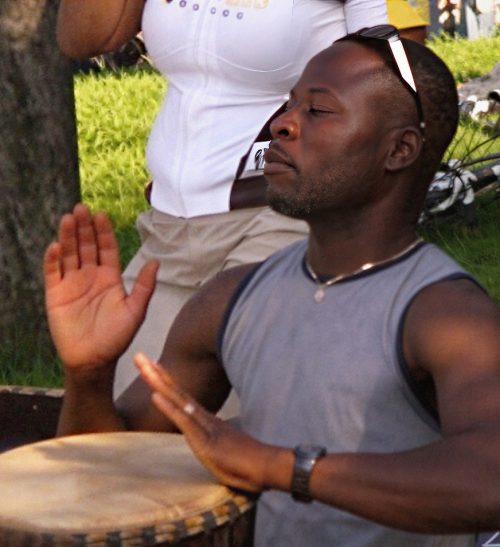
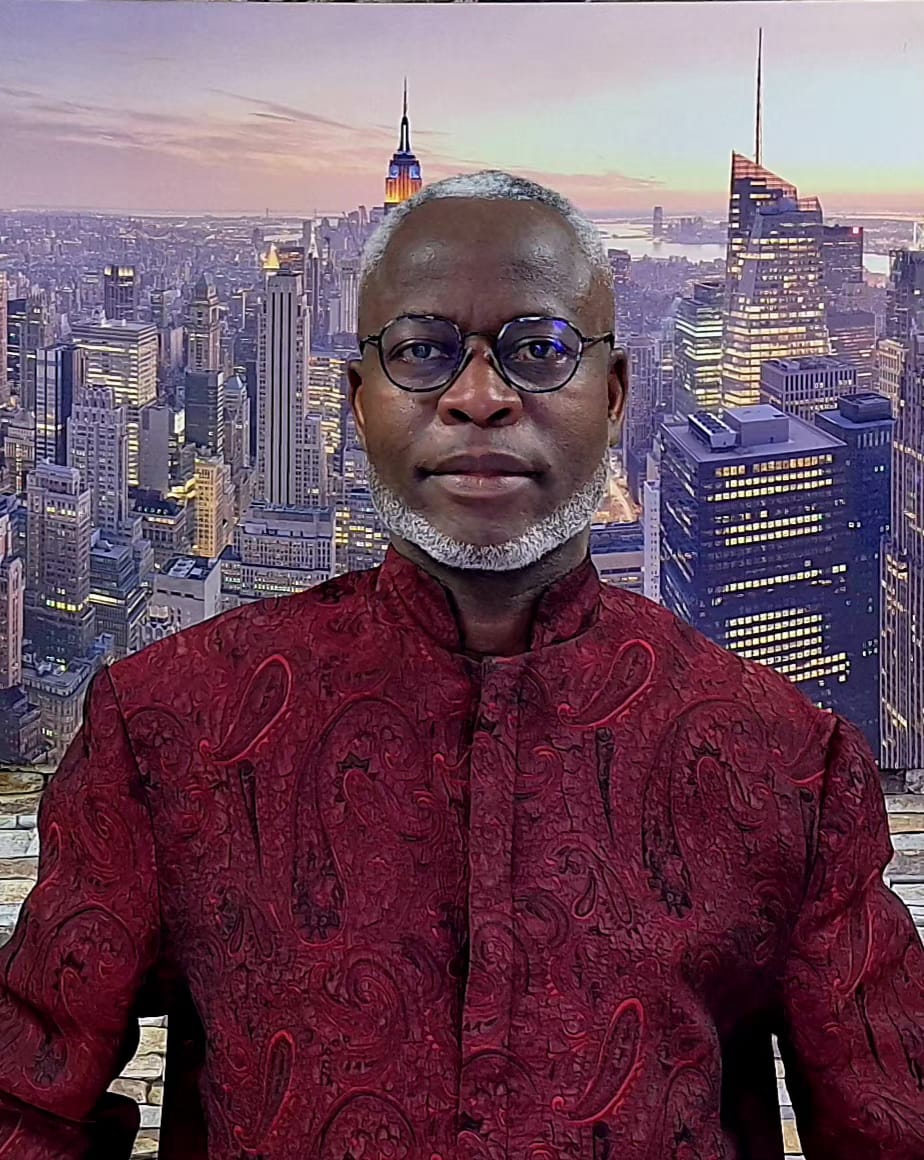
About Shedrach Uzenab
About Shedrach Uzenab
Shedrach Uzenab – Master Artist Biography
Shedrach Uzenab is a Nigerian-Swiss visual artist whose work explores memory, cultural identity, and humanity’s connection to the natural world. Like Soyinka’s Abiku — aware of the law but not the book of compassion — some repeat patterns without love. Uzenab’s work seeks to break such cycles, inviting reflection, empathy, and deeper human connection.
Working across sculpture, installation, and performance, he creates symbolic forms that reflect spirituality, heritage, and the shared human experience.
At the heart of his artistic philosophy is Olumëna – Mother Earth. Long before memory was written, before history took form, there was the Creator—unseen and infinite. From this divine power emerged woman, the living vessel of creation, to give life to the world and nurture its children. Uzenab calls her Olumëna. She is not only the source of life but the living embodiment of divine creative power. Through her, humanity learns to love, remember, and protect the world. Without women there would be no generations; civilizations would not rise. In every sculpted form, installation, and performance, Uzenab honors Olumëna, reminding us that women are the reflection of God’s creative power, and that humanity’s survival depends on their care, wisdom, and strength.
Uzenab has participated in international cultural initiatives, including the Peace and Development project for the African Union Office in Geneva, exhibited at the Kempinski Hotel Geneva, and projects connected to the United Nations. His artistic practice also includes a 9/11 remembrance project dedicated to reflection, unity, and resilience.
He is the founder of the intercultural initiatives Afrika in Town and Africa Meets Europe, parallel platforms promoting African art and cultural dialogue across Europe. These projects have been presented in venues including the Old Town Hall in Canton Zug, exhibitions in Nidwalden, Obwalden, and Lucerne in Switzerland, and internationally in Tarnowskie Góry, Poland.
His work also extends into community engagement and philanthropy through performance projects, including dancing initiatives supporting Water for the Third World, Rotary Club Baselland, and Taxi Tixi, Kanton Zug, as well as performances at the Old Börse Hall, Zurich. He has also exhibited at the International School of Zug & Lucerne and at Valiant Bank, Zug.
“I am not Picasso or the masters,” Uzenab reflects, “but history will tell — one day my artworks shall stand tall alongside them.”
An African adage reminds us that the fingers of the hand are not alike, yet they must work together. In the same way, humanity does not need to be the same — man or woman, educated or uneducated, West or East, Shedrach or Picasso. What matters is that each of us offers the best of what we can give, so that together we may serve humanity and make the world a better place.
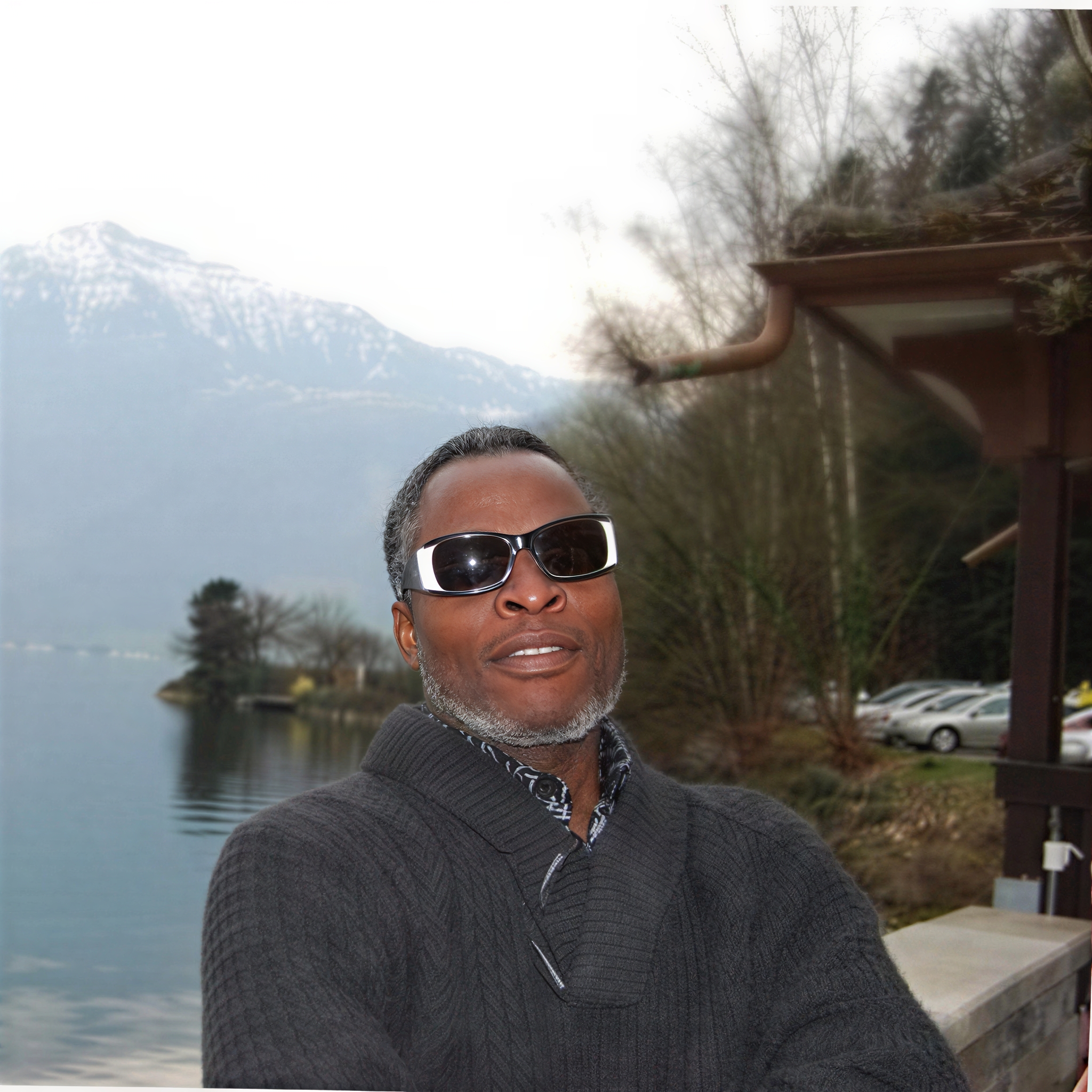
My life is like my names: full of different facets, different roles, different perspectives and different meanings. And it is not stable: it flows like a river passing different landscapes, overcoming different obstacles, changing its velocity and depth according to the ground it is flowing through.
I was a happy child spending carefree days surrounded by great nature and the wise love of my mother and grandmother. I was a hard working, sad boy, who had to grow up early taking care of my little sister and my sick mother.
After mother’s death I became a lonely teenager living the life of a slave in the polygamous house of my father. Outside this house I was an admired and respected son of Ezomon and inside a motherless child, not worth to be supported, condemned to serve the others.
I was living between traditional ghosts with their oraeles, swears, prophecies and sacrifices and the prayers to the only God and his son Jesus. I was torn between the peace and beauty of nature – closed village life and the exciting wide variety of metropolitan bustle of Lagos – city.
“My life is like my names: full of different facets, different roles, different perspectives and different meanings.”
Shedrach Uzenab
Artist